What Are the Stages of Film Production?
A film project typically goes through three main stages: pre-production (script development, casting, location and set preparation, sound and lighting planning), production (the actual shoot), and post-production (editing, color grading, sound, visual effects).
Sound runs through all three stages: from consulting on recording solutions during pre-production, to capturing dialogue on set, to sound design and mixing in post. A sound team involved early, from the planning stage, often saves significant time and cost down the line.
1. Pre-Production: Building the Foundation
Pre-production is the stage where all the necessary elements are prepared before the cameras start rolling. This is when the script is finalized, actors are cast, locations are surveyed, and the production schedule is developed.
For sound, getting involved at this stage allows the technical team to identify factors that may affect recording during production. Traffic, construction sites, air conditioning systems, highly reverberant spaces, and other sources of noise can all be identified through location surveys.
Based on these considerations, the sound team can recommend appropriate microphones, wireless systems, recording positions, and other solutions for each location. Decisions made before filming begins can significantly reduce problems that might otherwise arise on set.
2. Production: Bringing the Plan to the Set
The production stage is when the script and plans developed during pre-production are turned into actual images and sound.
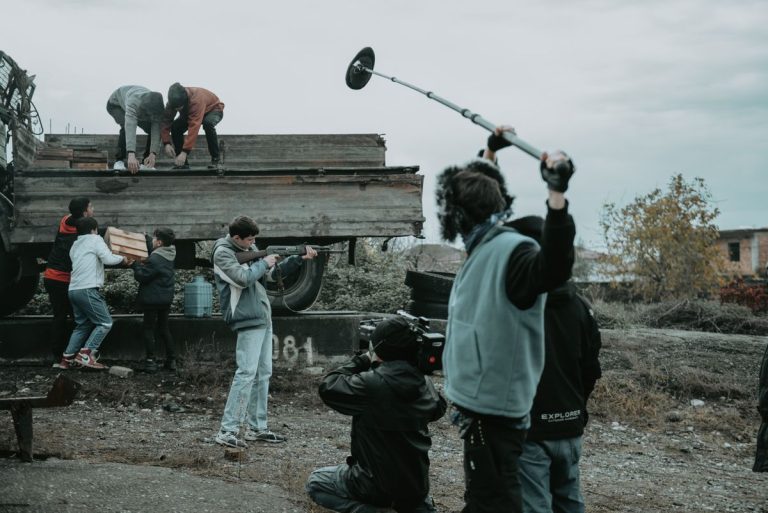
During filming, the sound department is responsible for recording dialogue and other necessary sounds from the location. The Production Sound Mixer monitors the recording system and signal quality, while the Boom Operator positions the microphone appropriately according to the actors’ movements and the camera’s framing.
Location sound recording requires continuous coordination with the director, cinematographer, lighting department, and other crew members. The microphone needs to be close enough to the sound source to capture clean audio, while remaining outside the camera frame and not interfering with the actors’ movements.
In addition to dialogue, the sound team may record room tone, ambience, wild tracks, and sounds that are characteristic of the location. These recordings can become valuable material during post-production.
3. Post-Production: Completing the Film
After filming is completed, the recorded picture and sound materials enter post-production. This is the stage where the film gradually takes its final form for release or screening.
On the picture side, post-production may include editing, color grading, visual effects, and graphics. On the sound side, the process may include dialogue editing, noise reduction, ADR, Foley, sound design, ambience editing, sound effects, and finally mixing.
Each component serves a specific purpose. Dialogue conveys the story and performances, ambience establishes a sense of space, Foley adds sounds associated with movement and physical interaction, while sound design can expand the film’s sonic world beyond what was directly captured on location.
During mixing, all of these elements are balanced and combined to create a coherent soundtrack that works with the picture and meets the technical requirements of the project.
Sound Is a Continuous Process
Looking at these three stages, it becomes clear that sound is not simply a task that begins after the picture has been edited.
A decision made during pre-production can affect how sound is recorded during production. The quality of the location recordings, in turn, determines how much flexibility the post-production team has. The material captured earlier then becomes the foundation for building the soundtrack during the final stages.
For this reason, coordination between the sound team, director, cinematographer, and production team from the beginning plays an important role in maintaining an efficient workflow.
A well-prepared project does not mean that every problem can be eliminated, but it allows the team to identify and address issues at the appropriate stage — rather than having to solve a complex sound problem after filming has already been completed.
From pre-production and production to post-production, each stage contributes to the final quality of a film. The same is true for sound: a strong soundtrack often begins long before the mixing process takes place.